
Case Study SQR-UFO-001: The Rendlesham Forest incident
SIDE QUESTS OF REALITY | SQR-UFO-001 | RENDLESHAM FOREST INCIDENT
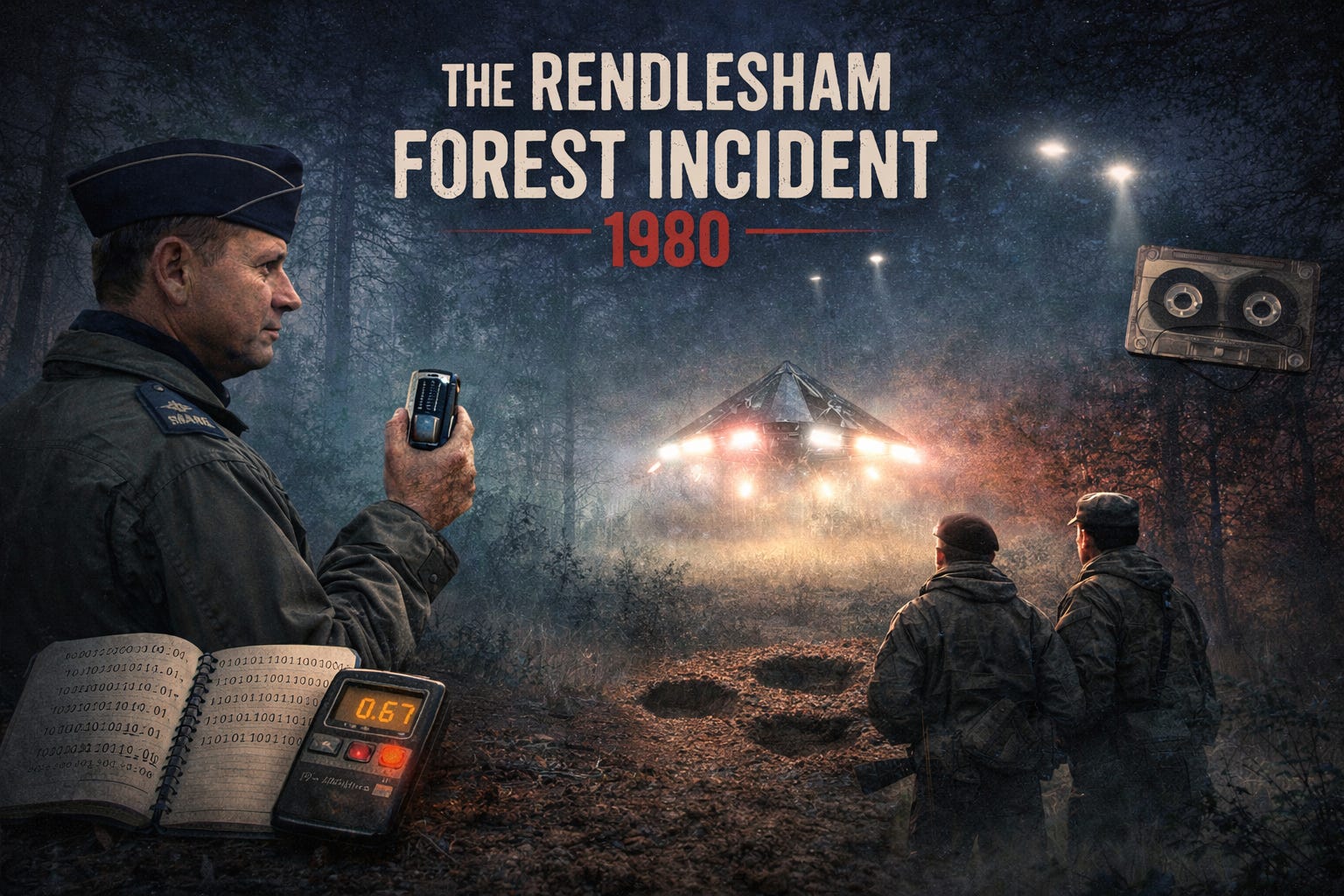
At approximately three in the morning on December 26, 1980, a security patrol near the east gate of RAF Woodbridge saw lights descending into Rendlesham Forest.
This is where the simple part of the story ends.
What follows over the next three nights involves a deputy base commander of the United States Air Force recording himself in real time as he chases something through a forest in Suffolk, England. It involves ground indentations, radiation readings, physical symptoms that would take decades to surface in official recognition, and a piece of audio that remains, forty-five years later, one of the strangest documents ever produced during a military investigation.
It involves men who went into the woods as skeptics and came out as something else entirely.
What they came out as, and what they encountered, is still not settled.
🎙️LISTEN TO THE SIDE QUESTS OF REALITY PODCAST

The Setting
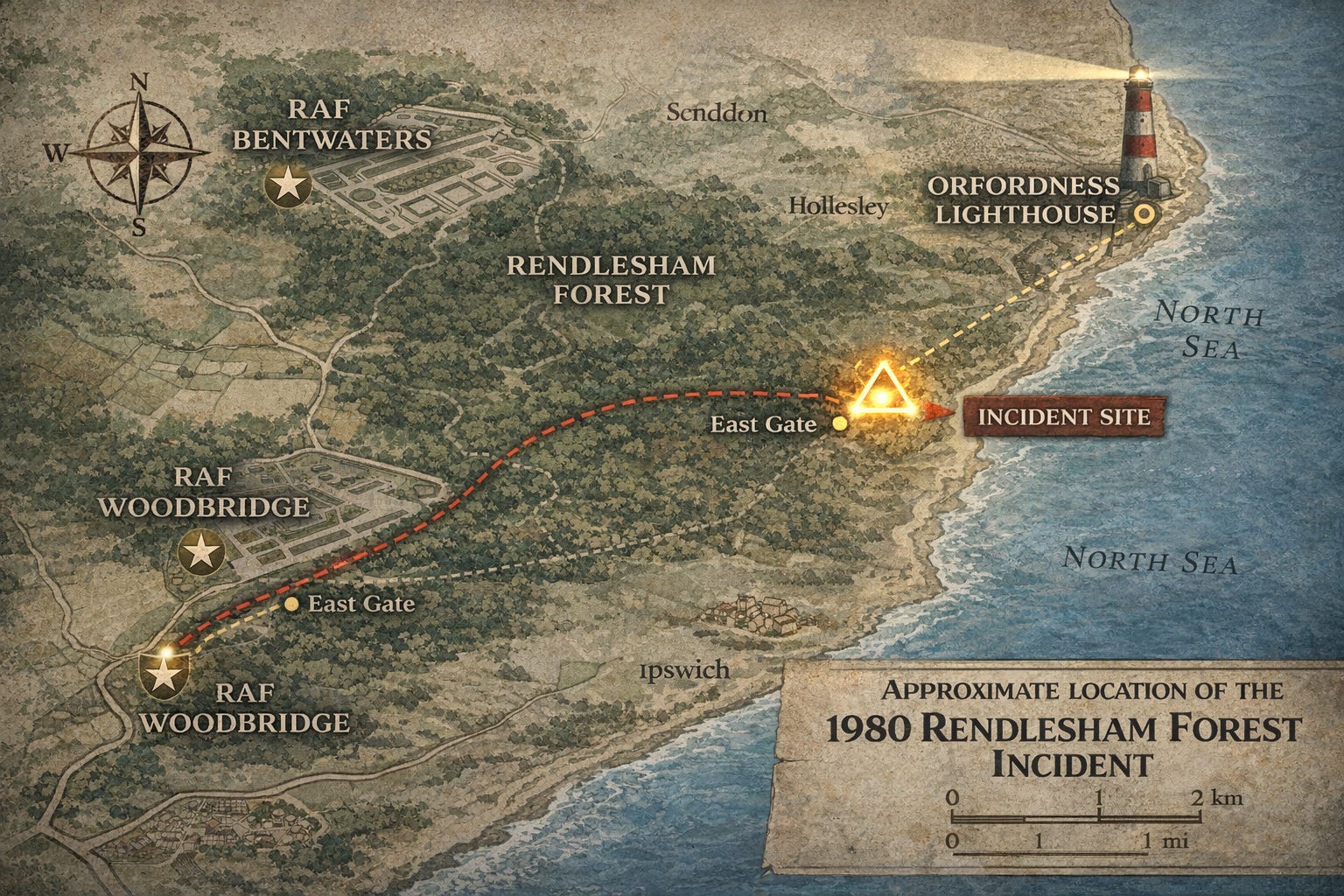
Rendlesham Forest sits in Suffolk on England’s eastern coast, about eight miles from Ipswich. In December 1980 it bordered two United States Air Force installations operating under NATO command: RAF Bentwaters to the north and RAF Woodbridge to the west. Together they formed one of the most strategically significant American military presences in Europe, home to A-10 Thunderbolt aircraft and, according to persistent accounts that have never been officially confirmed or denied, tactical nuclear weapons.
The main events of the incident took place in the forest, which starts at the east end of the base runway, about half a mile to the east of the East Gate of RAF Woodbridge. The base commander was Colonel Ted Conrad. His deputy was Lieutenant Colonel Charles I. Halt. Both would become central figures in what happened next.
It was Christmas night going into Boxing Day. Cold, dark, the forest closed in on all sides.
Night One: Penniston and Burroughs
Around three in the morning, servicemen initially thought they were looking at a downed aircraft. Upon entering the forest to investigate they saw a strange glowing object, metallic in appearance, with coloured lights. As they attempted to approach the object, it appeared to move through the trees, and the animals on a nearby farm went into a frenzy.
The two men who went deepest into the forest that first night were Sergeant Jim Penniston and Airman First Class John Burroughs. A third, Airman Ed Cabansag, stayed near the truck as a radio relay while the other two went in on foot.
Burroughs described what he saw in a statement the following year. The woods lit up and you could hear the farm animals making a lot of noises. They could see lights down by a farmer’s house on the forest’s edge. They climbed over the fence and started walking toward the red and blue lights and they just disappeared.
Penniston’s account goes considerably further.
He described a craft. Triangular, roughly nine feet long and six feet high. Made of a smooth, black, glass-like material. Covered in hieroglyphic-like symbols. One symbol, a triangle within a circle, was larger than the others. The craft stood on three legs. It then retracted those legs and maneuvered its way through the trees.
Penniston says he touched it.
The craft was warm to the touch and felt like metal. When he touched one of the symbols, it was as if static electricity was building up. Then, he says, everything went white. He could neither see nor hear. He was alone in a brilliant brightness for an undetermined amount of time. When his sight returned he was standing next to the craft, facing the symbols. The craft then lifted approximately four feet from the ground, maneuvered between the trees, ascended to treetop level, and disappeared.
Back at the base, Penniston could not sleep. He kept seeing ones and zeros in his mind. He wrote them down. Sixteen pages, filled with binary digits, before the images stopped.
He put the notebook away and told no one about its specific contents for thirty years.
The next morning, three depressions were found in the forest floor at the site of the alleged landing. Triangular in arrangement. Consistent with a structure resting on three legs.
The Halt Memo
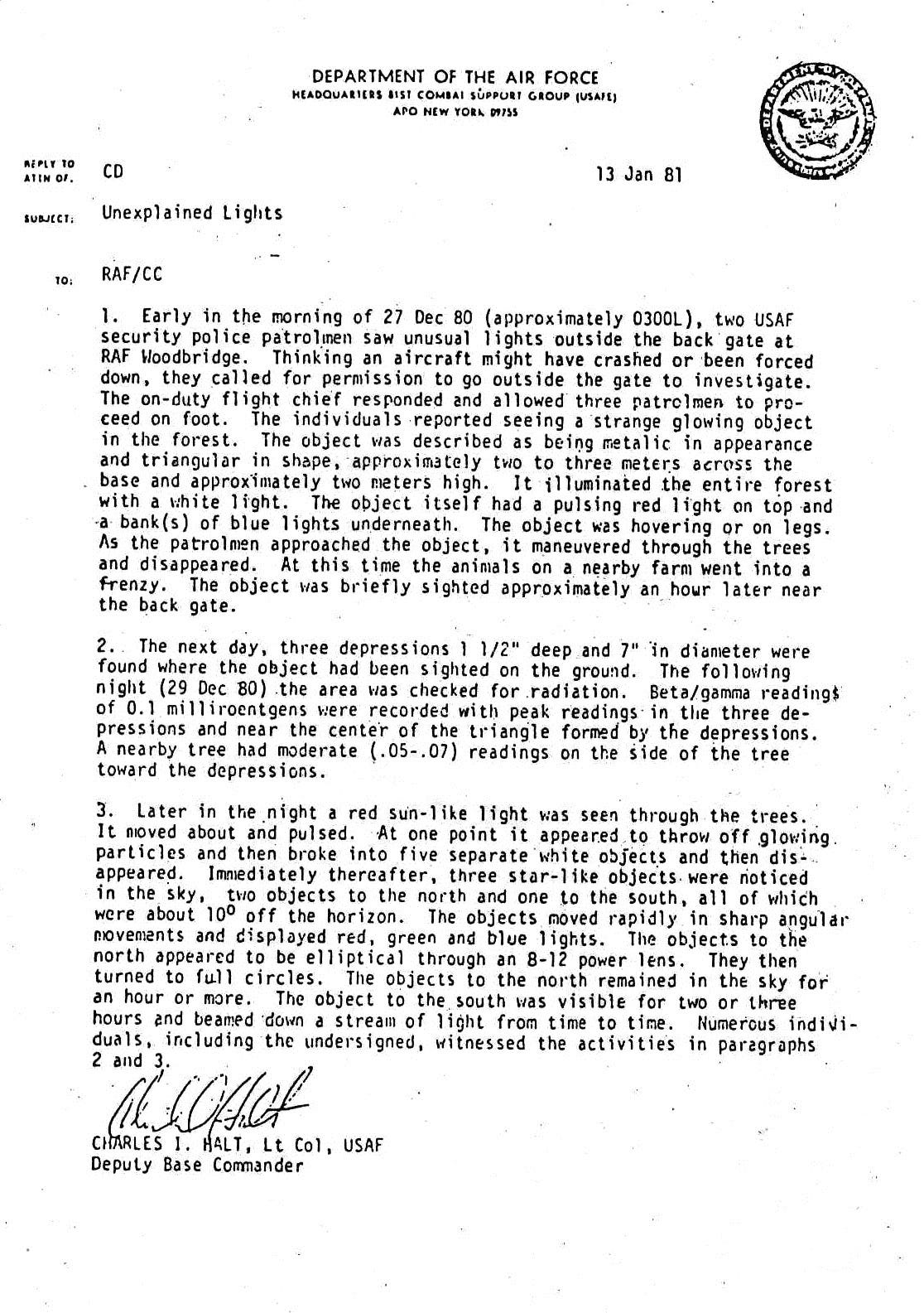
Thirteen days after the incident, on January 13, 1981, Lieutenant Colonel Charles Halt composed a memo addressed to the UK Ministry of Defence. It runs to one page. It is written in the clipped, careful language of a military officer committed to accuracy. It is titled, with characteristic understatement, “Unexplained Lights.”
The memo describes the first night’s encounter, the depressions found in the soil, radiation readings taken at the site the following day, and then the events of the third night, when Halt himself went into the forest. It was released to the public via Freedom of Information requests in 1983, igniting global fascination and cementing the incident’s status as Britain’s Roswell.
What the memo describes in its final paragraphs is what makes Rendlesham different from almost every other case in the literature.
Because Halt did not just write about it afterward.
He recorded it as it happened.
The Tape
On the night of December 27, Halt was at an officers’ dinner when a lieutenant came in and said: the UFO is back.
Halt returned to his quarters to change and joined a group out in the forest sometime after midnight on December 28. He carried a hand-held micro-cassette recorder, which he clicked on and off throughout the investigation to preserve battery life. Although the tape itself lasts just over eighteen minutes, it covers activities spanning several hours.
What you hear on the tape is not a dramatic production. It is the sound of men working in the cold dark with instruments, taking readings, trying to be methodical about something that is resisting methodical treatment.
The early sections document the investigation of the landing site from the first night. Halt and his men are measuring radiation with a Geiger counter, taking samples from damaged trees, trying to establish what the impressions in the ground represent.
Halt notes elevated readings at the site and describes damaged trees. He observes that all the tissue looks like something twisted as it sat down on them. He notes crystalline pine sap that had come out fast, which he finds strange. Another soldier confirms that the damaged trees all face in toward the centre of the landing site.
Skeptics have since argued that the tree marks were pre-existing axe cuts made by foresters marking trees for felling, and that the radiation readings were within normal background range. Halt has disputed both assessments.
Then, two-thirds of the way through the tape, something changes.
Lieutenant Englund’s voice: “Right on this position here. Straight ahead, in between the trees. There it is again. Watch. Straight ahead, off my flashlight there, sir. There it is.”
What follows is Halt’s voice, recorded in real time, tracking a light through the forest. He describes a small red light, possibly a quarter to half a mile out, moving between the trees. He orders flashlights off. He watches through a night-vision scope. He records bearings. He describes the light appearing, vanishing, reappearing, moving with a behavior that he cannot attribute to anything familiar.
Then three objects appear in the sky. Halt describes them as starlike, moving with sharp angular movements, displaying red, green, and blue lights. One of them, he records, sends down a beam of light into the weapons storage area of the base.
He describes all of this in the present tense, as it is occurring, on tape, while it is happening.
He does not sound frightened. He sounds like a meticulous military officer trying very hard to document something he does not have a category for.
That quality, that determined professional composure in the face of what he is describing, is what makes the tape so difficult to set aside.
The Explanations
The official explanations for the Rendlesham incident have been consistent and consistently insufficient.
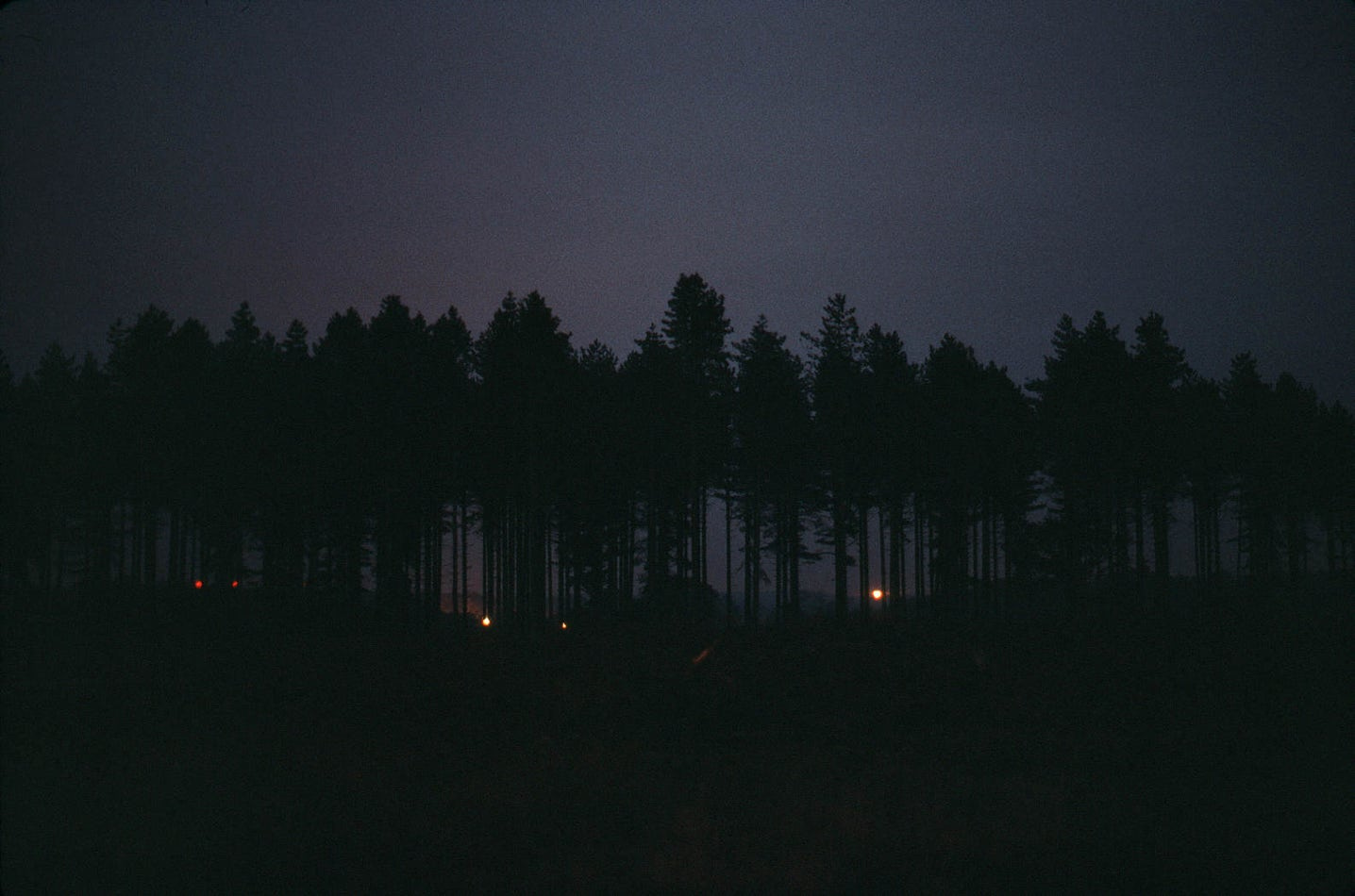
The lights on the first night have been attributed to a fireball meteor recorded over southern England around the same time. The flashing beam of light that servicemen saw upon entering the forest has been attributed to the nearby Orfordness Lighthouse, which is known to have shone in the direction of the forest. On the night of the first incident, local police called to the scene reported seeing nothing but the light from the lighthouse, which at the time was one of the brightest in the UK.
In the last part of the tape, Halt refers to three objects in the sky. One skeptical analysis suggests these may have been bright stars, with their colours caused by twinkling, an atmospheric effect particularly prominent when objects are close to the horizon.
These explanations are not absurd. They deserve to be taken seriously. Misidentification is real. Lighthouse beams seen through trees at night can produce disorienting effects. Stars near the horizon do appear to move and change color.
The problem is the compound nature of what is being explained away.
A meteor accounts for lights in the sky. It does not account for the craft that Penniston describes touching, the depressions in the ground, the radiation readings at the landing site, or the behavior of whatever Halt was tracking on his tape for several hours while a large group of trained military personnel watched it with night-vision equipment.
A lighthouse accounts for a flashing light visible from the forest edge. It does not account for Halt’s description of a light that moved through the trees, responded to their approach, and eventually sent a beam down into a specific area of the base.
Stars account for lights in the sky. They do not move with sharp angular movements or disappear and reappear in a way that multiple witnesses, watching simultaneously through instruments, track and record in real time.
Each individual explanation is locally plausible. Applied to the whole record, they require the event to have been not one misidentification but a cascade of simultaneous, unconnected misidentifications, all occurring to experienced military personnel over three nights, in a way that happened to produce consistent accounts, physical traces, and a real-time audio document.
That is a more extraordinary claim than the one it is meant to refute.
What the Ground Left Behind
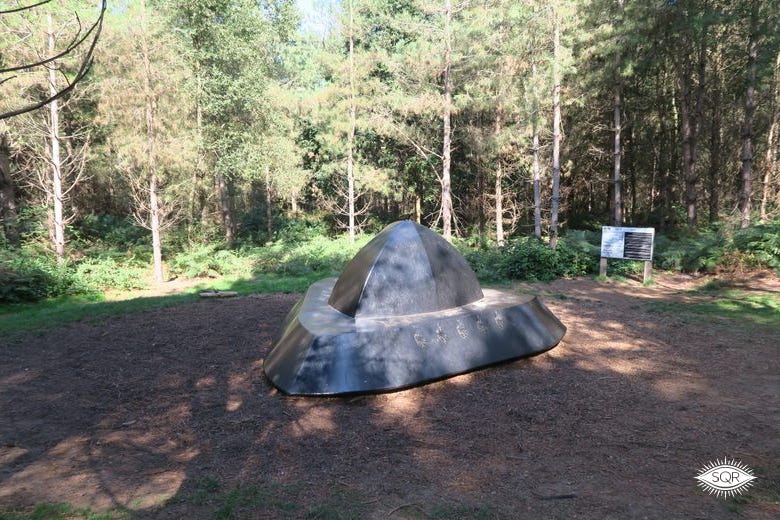
The depressions found in the forest the morning after the first night were measured and photographed. Three indentations, arranged in a triangle, consistent with a structured object resting on three equidistant points.
Halt’s team returned to the site the following night with radiation detection equipment. The readings they recorded became one of the most contested elements of the case. Halt and his defenders maintain the levels were significantly elevated. Skeptical analysis of the tape suggests that the readings Halt describes were consistent with normal background radiation, and that what he interpreted as elevated readings was simply the natural variation of background levels across different positions.
What is not disputed is that the readings at the center of the depression site were higher than at the periphery. Whatever caused the depressions also left a pattern in the radiation readings that followed its shape.
Tree damage was also documented. Branches broken and scorched at the landing site, all facing inward toward the center. This detail appears both in Halt’s real-time tape and in subsequent accounts from multiple witnesses.
The soil samples taken from the site were analyzed. Analysis showed traces of calcium carbonate, which came from the plaster that Penniston had used to take casts of the depressions the morning after the initial sighting. This confirms, at minimum, that Halt’s team was examining the same site Penniston had documented, and that the physical traces were real enough to warrant casting.
The Body Count
Rendlesham is unusual in the UAP literature for what it did to its witnesses over time.
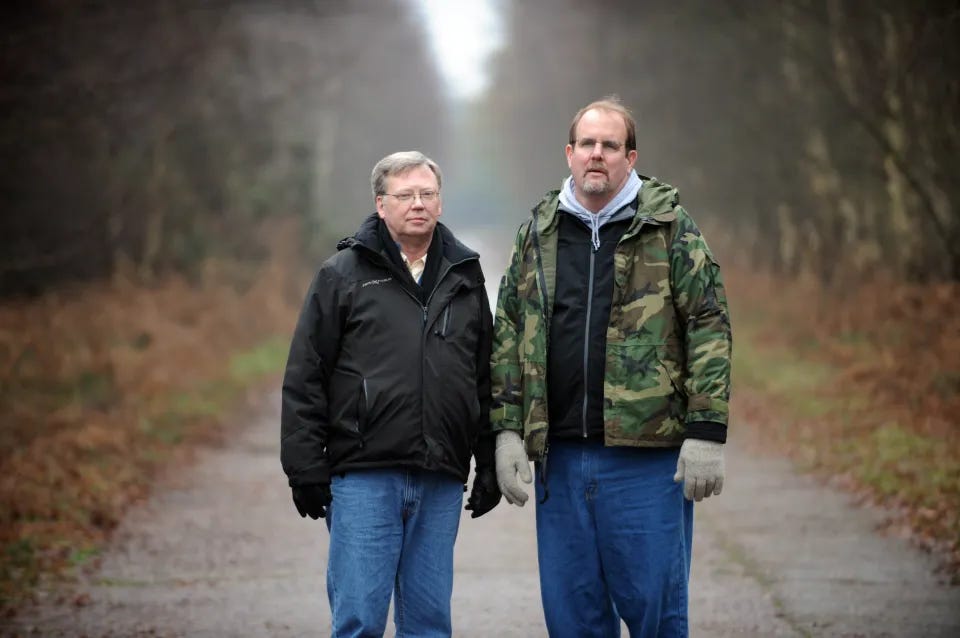
Jim Penniston developed PTSD. John Burroughs developed severe heart problems that required open heart surgery. For years, both men fought the US government for access to their own medical records, which remained classified. The classification of personal medical records belonging to airmen who had simply investigated unusual lights in a forest is itself a data point worth sitting with.
In 2015, the US government made an unprecedented move by acknowledging the health issues of former Airman First Class Burroughs, resulting from his encounter with a UAP in England’s Rendlesham Forest in December 1980. The decision to grant Burroughs total medical disability by the Veterans Administration not only recognizes the reality of the phenomenon but also highlights the potential health consequences of such encounters.
A former CIA medical officer identified the cause of Burroughs’ injuries as broad-band non-ionizing electromagnetic radiation, radio frequencies linked to cardiac and neurological injuries in various classified and unclassified studies.
A former Ministry of Defence official said the payout confirms what Burroughs saw was real and had caused him physical harm.
This is not a UFO enthusiast’s interpretation. This is a formal finding by the United States government, after years of resistance, that a specific airman was injured by something real during a specific encounter on a specific night in Rendlesham Forest.
What injured him has not been officially named.
The Notebook
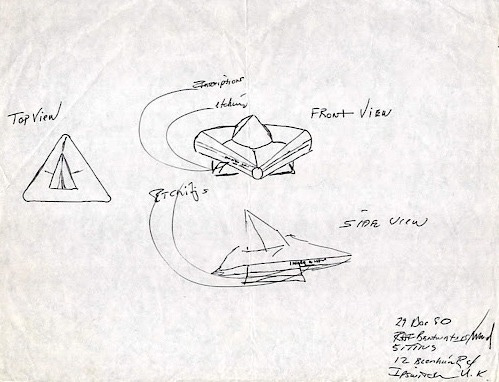
In 2010, thirty years after the event, Penniston revealed what was in those sixteen pages he had written after touching the craft.
Binary code.
Pages of ones and zeros, written by a man who at the time had no knowledge of binary systems, filling a standard Air Force notebook in the hours after his encounter.
When investigators had the sequences analyzed, what came back shocked everyone, including Penniston himself. The binary code translated into a coherent message using ASCII, which read: “Exploration of Humanity. Continuous for Planetary Advance. Eyes of Our Eyes. Origin Year 8100.” Along with the message, the binary sequence contained coordinates for specific geographic locations across Earth, including the Great Pyramid of Giza, the Nazca Lines, Sedona in Arizona, Caracol in Belize, the Temple of Apollo in Greece, Tai Shan in China, and a point in the Atlantic Ocean corresponding to the legendary island of Hy-Brasil.
Penniston himself has stated he does not believe the craft was alien in origin but suggested it might be from another dimension or even another time, with the phrase “Origin Year 8100” leading to speculation that the message came from humans six thousand years in the future.
The skeptical case against the notebook is serious and worth stating clearly. The notebook contains the wrong date and time for the event, which raises questions about whether it was written during the encounter as Penniston claims or afterward. The binary code was not revealed for thirty years. The translation relies on ASCII encoding, which is a human-made convention that a non-human intelligence would have no particular reason to use. The message, once decoded, contains phrases that are vague enough to be interpreted in almost any direction.
These are legitimate objections.
What they don’t explain is why a 26-year-old Air Force security policeman in 1980, with no background in computing, would fill sixteen pages of a notebook with ones and zeros the morning after an anomalous encounter. What they don’t explain is what he was writing, if not what he says he was writing. What they don’t explain is why, if it was a fabrication, he sat on it for thirty years.
The notebook is either the strangest genuine document to emerge from any UFO case in history, or it is an elaborate fabrication by a man who had every reason not to fabricate anything, who spent decades avoiding the subject, and who gained nothing obvious from eventually revealing it.
Both possibilities are available.
What Halt Said Later

Charles Halt did not go public quickly. He was a military officer, a careful man, professionally conservative. For years he gave measured accounts and declined to speculate beyond what he could document.
Over time, his position hardened.
He has said publicly, in multiple interviews across multiple decades, that what he saw in Rendlesham Forest was not from this world. He has said he believes the incident was real, that the official explanations are inadequate, and that the US and UK governments know more than they have disclosed.
He has also said that nobody ever debriefed him after the incident. That he reported what he saw up the chain of command and nothing came back down.
A deputy base commander at a major NATO installation witnesses an unexplained aerial event over three nights, files an official memo documenting it, and is never debriefed about it.
The absence of a debrief is its own form of information.
The Missing Files
Four years before Burroughs won his VA settlement, the Ministry of Defence released 35 archives of UFO-related documents and then revealed that the papers on Rendlesham had gone missing.
Not misfiled. Not restricted. Missing.
The complete MoD file on Britain’s most famous and most documented UFO incident cannot be located in the British government’s archives.
This has been acknowledged officially. No explanation has been provided.
What Rendlesham Is
Rendlesham is not the most dramatic UFO incident on record. It does not feature the largest objects or the most extraordinary claims. There are cases with more spectacular witness descriptions, more alien figures, more explicit contact.
What Rendlesham has that almost nothing else does is texture.
It has a real-time audio recording of a military investigation in progress. It has a formal memo written by a senior officer thirteen days after the event. It has radiation readings documented in the field. It has physical ground traces measured and photographed the morning after the first night. It has multiple witnesses whose accounts agree on the essential structure of what occurred. It has declassified documents from both the US and UK governments referencing the incident. It has a VA ruling formally connecting a witness’s physical injuries to the encounter. And it has a set of official explanations that, examined carefully and honestly, do not account for the whole record.
It is the case that most clearly demonstrates what this series has been arguing from the beginning.
Something happened. What it was has not been established. The record is too substantial and too well-documented to dismiss, and too incomplete to resolve.
What remains after you remove the meteor, the lighthouse, the stars, and the background radiation from the accounting is not nothing.
It is three depressions in the ground, a man who needed open heart surgery, sixteen pages of binary code, an audio recording of a lieutenant colonel tracking something through a forest in real time, a government medical ruling that has never been fully explained, and a file that can no longer be found.
That is what remains.
It remains, forty-five years later, exactly where the men who walked into the forest left it.
In the dark.
Unresolved.
This case is filed as SQR-UFO-001.
If you want to be notified when SQR-UFO-002 drops, and when the cases start talking to each other in ways that are difficult to explain, subscribe below.
That’s all this is. Careful attention. Sustained over time.
Welcome to Side Quests of Reality.