
Case Study SQR-PAR-001: The Enfield Poltergeist, and why eighteen months of documented chaos still has no clean explanation
SIDE QUESTS OF REALITY | SQR-PAR-001 | PARANORMAL
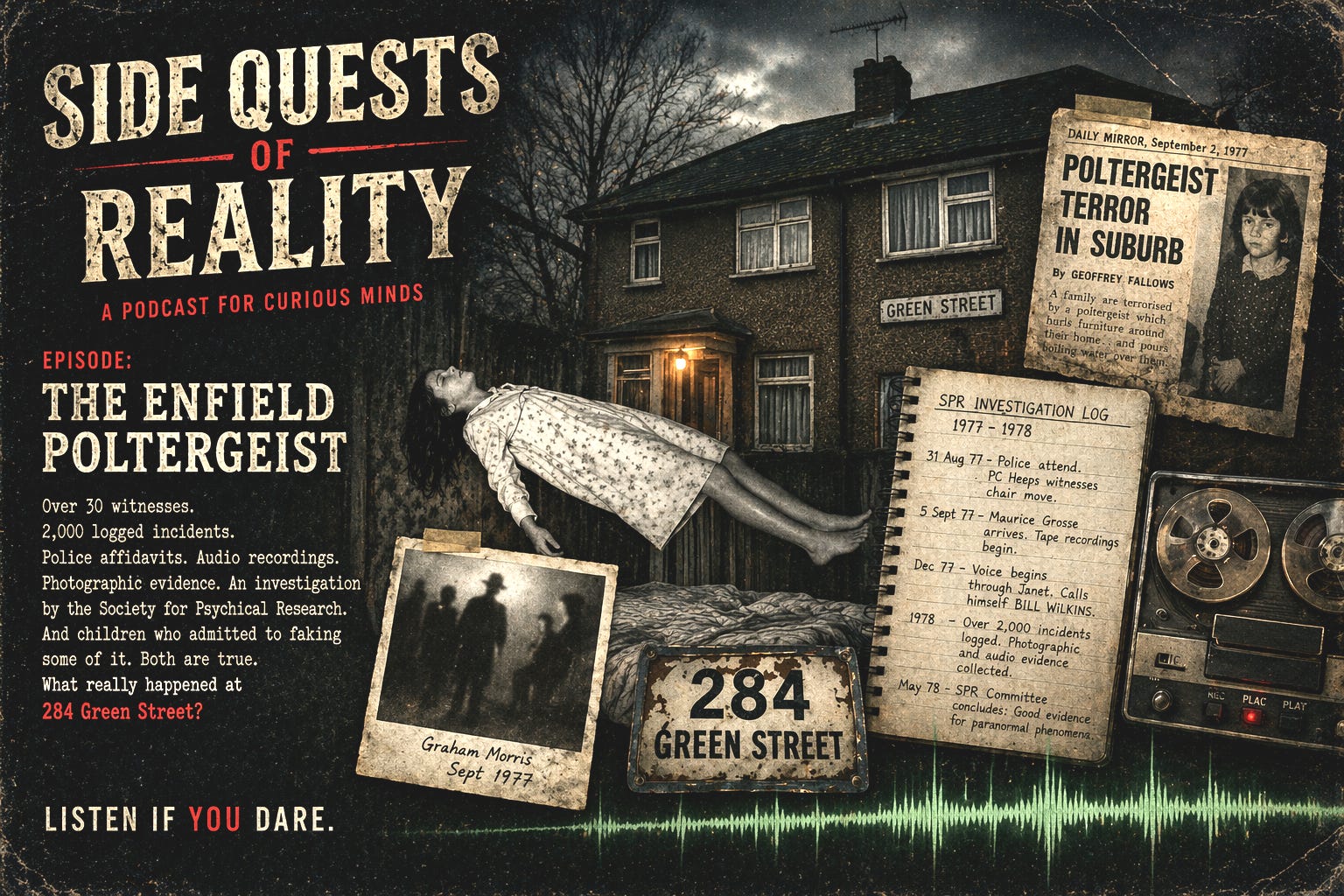
Most haunting cases have one or two credible witnesses and a gap-filled record that skeptics can walk through without difficulty. The Enfield case has over thirty witnesses, more than 2,000 logged incidents across eighteen months, sworn police affidavits, audio recordings, photographic evidence, and a formal investigation by the Society for Psychical Research whose committee concluded there was good evidence for paranormal phenomena described by credible informants. It also has confirmed instances of faking by the children at its center. Both things are true. Working out what that means is the case.
The setting
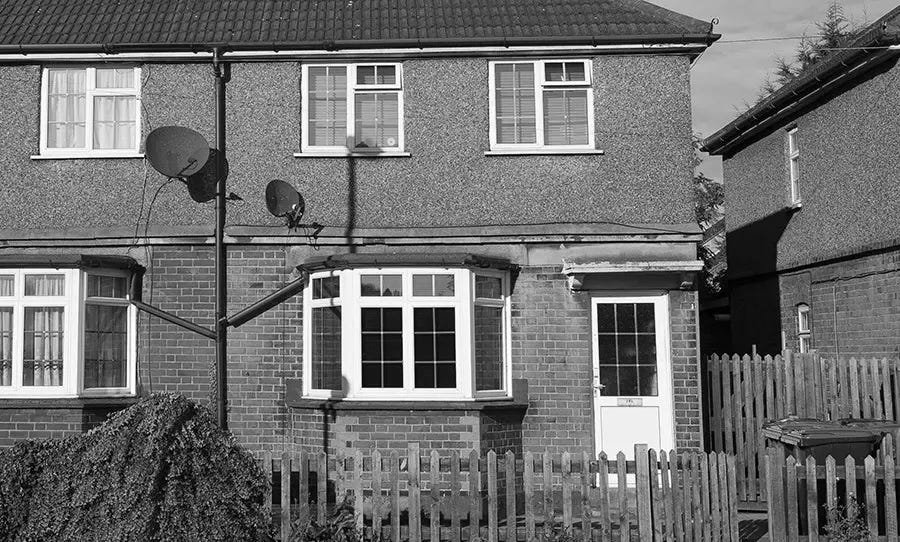
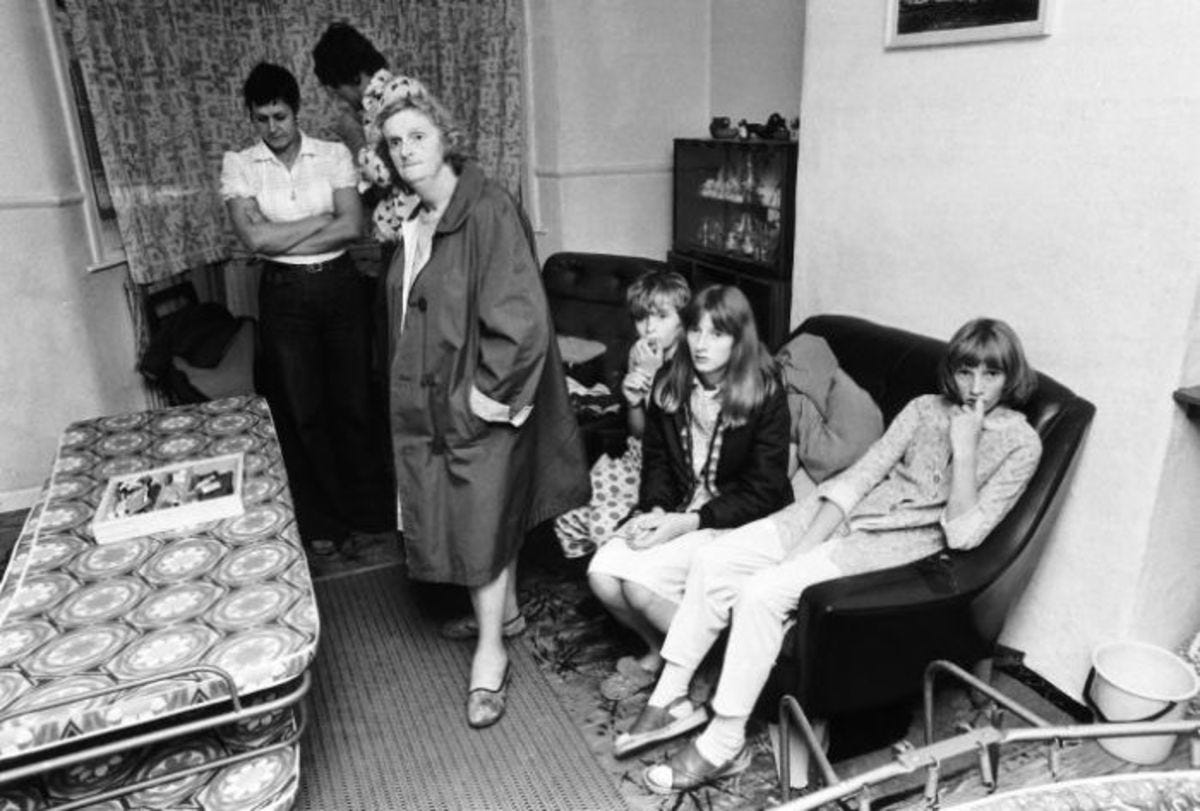
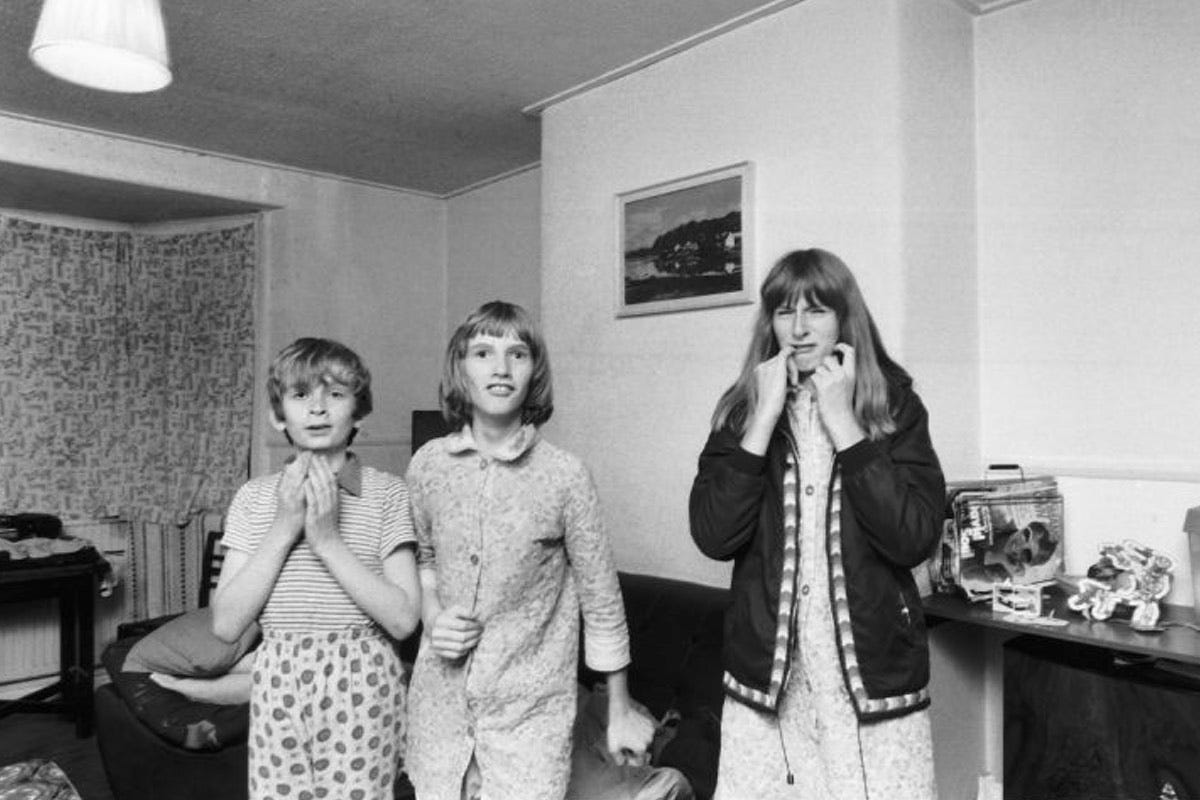
284 Green Street is a modest semi-detached council house in Brimsdown, a working-class suburb in North London. In August 1977, it was home to Peggy Hodgson, a single mother recently separated from her husband, and her four children: Margaret, thirteen, Janet, eleven, Johnny, ten, and Billy, seven. The family rented the property from the local council and had been there since 1967. Nothing in the house’s history distinguished it. No murders, no tragedies, no prior reputation for unusual activity.
Peggy was struggling financially. The area was ordinary. The children attended local schools. Nothing about 284 Green Street, the family, or the neighborhood suggested that what began there in late August 1977 would generate one of the most documented paranormal investigations in modern history.
The timeline
Late August 1977
Peggy Hodgson notices furniture moving. Knocking sounds begin in the walls. Beds shake at night. The children’s marbles and toy building blocks are thrown across rooms.
August 31, 1977
Peggy calls the police. Police Constable Carolyn Heeps and a male officer attend. PC Heeps witnesses a chair slide approximately four feet across the floor with no visible cause. She later signs a sworn affidavit describing what she saw.
Early September 1977
The Daily Mirror sends reporter George Fallows and photographer Graham Morris. Morris is struck in the face by a thrown piece of Lego while standing in the doorway. He photographs objects mid-flight.
September 5, 1977
Maurice Grosse of the Society for Psychical Research arrives. He will remain involved for over two years, maintaining detailed logs, making extensive tape recordings, and documenting phenomena with available technology.
September 1977
Guy Lyon Playfair, a writer and SPR member with experience investigating Brazilian poltergeist cases, joins Grosse. Together they begin a sustained investigation that will eventually log over 2,000 incidents.
December 1977
An anomalous voice begins emanating from Janet. It starts as whistling and dog-like barks, then develops into a human voice described as elderly, male, harsh, and guttural, entirely unlike Janet’s own voice.
December 1977
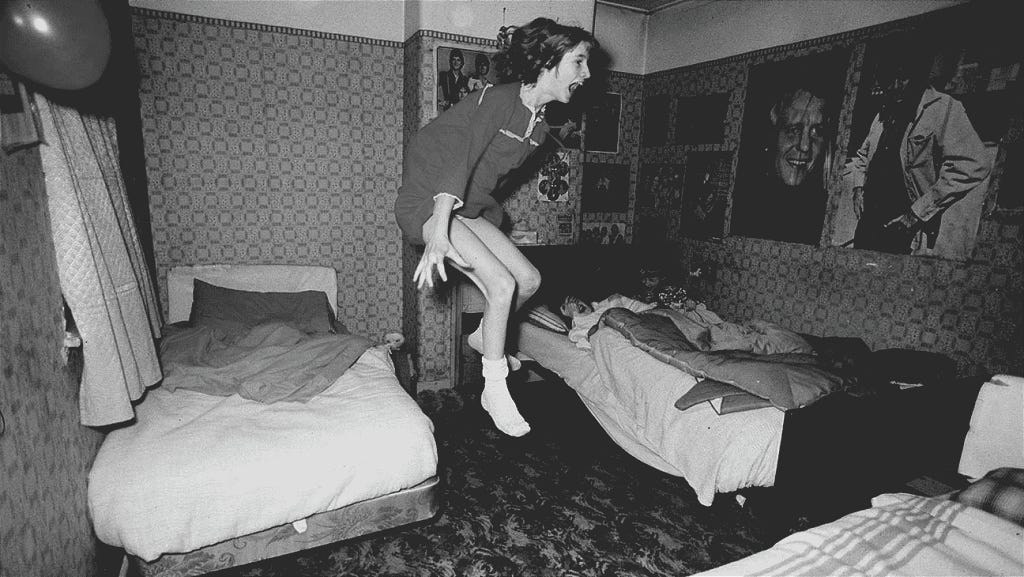
Photographer Graham Morris captures photographs of Janet apparently levitating above her bed. The images become the most reproduced and contested evidence from the case.
1978
The voice identifies itself as Bill Wilkins, claiming to have lived and died in the house, having gone blind and suffered a hemorrhage in his favorite chair. Details are later confirmed by Bill Wilkins’ son, who comes forward independently to corroborate specific facts about his father’s life and death in the house.
May 1978
The SPR establishes a formal committee to examine the investigation: Mary Rose Barrington, Hugh Pincott, Peter Hallson, and John Stiles. They interview many witnesses and find much of the testimony clear and convincing. The committee concludes there is good evidence for paranormal phenomena described by credible informants.
September 1978
The main period of activity ends. The Hodgson family continues to live at 284 Green Street. Peggy remains there for another twenty-five years until her death in 2003.
The investigators
Maurice Grosse
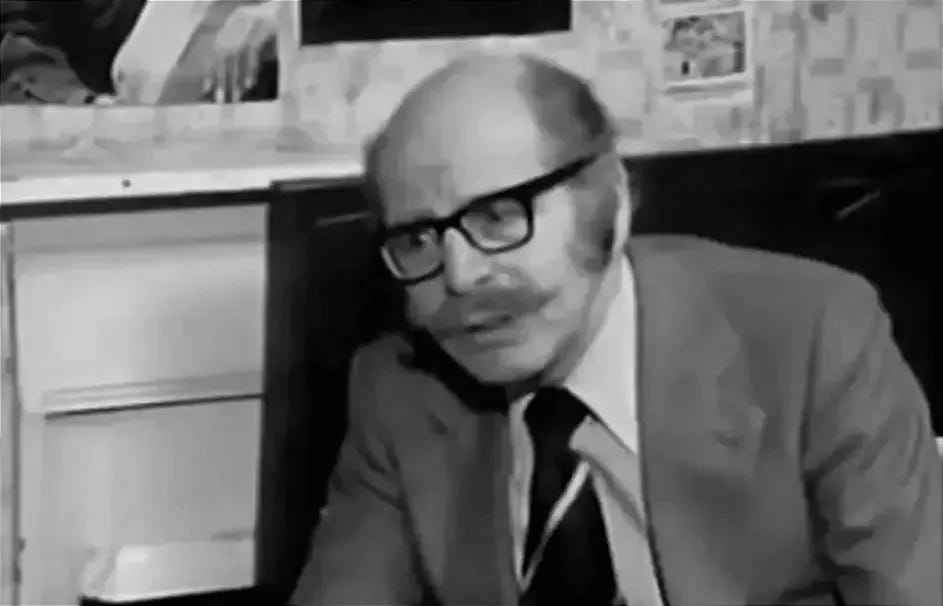
Maurice Grosse (1919-2006) was a retired inventor and businessman who had joined the Society for Psychical Research following the death of his daughter in a car accident, after experiences he believed to be paranormal during his grief.
He arrived at 284 Green Street on September 5, 1977. His approach was methodical: detailed logs of incidents, extensive tape recordings, documentation with available technology. He remained involved for over two years.
It has been noted, with varying interpretations, that one of the girls at the center of the case shared the same name as his deceased daughter. Whether this shaped his conclusions is a question the record does not resolve.
Guy Lyon Playfair
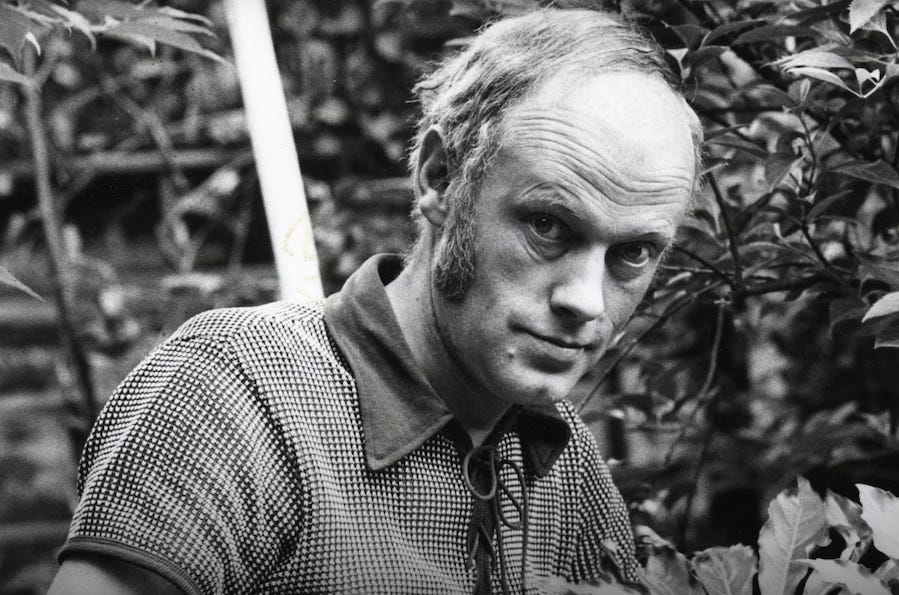
Guy Lyon Playfair (1935-2018) was a writer and SPR member who had spent years researching poltergeist phenomena in Brazil before joining the Enfield investigation. He brought comparative context that Grosse lacked. He later wrote This House Is Haunted, the most comprehensive account of the investigation. Playfair was candid in acknowledging that the children had faked some incidents, while maintaining throughout his life that this did not account for the whole record.
The SPR Committee
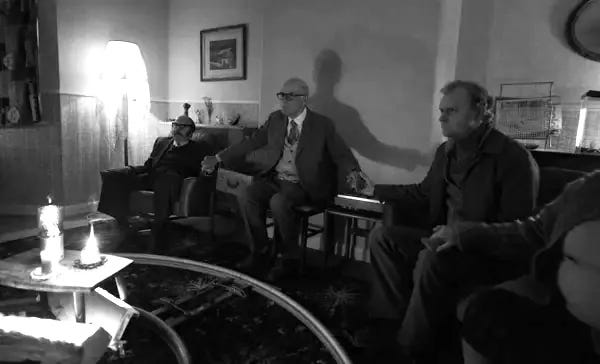
The formal SPR committee that examined the case in 1978 concluded that there was good evidence for paranormal phenomena described by credible informants, while reserving judgment on incidents that could not have been clearly observed or where witnesses were not entirely convincing. Committee member Mary Rose Barrington stated she was personally satisfied that paranormal events took place at Enfield. This is not a fringe endorsement. The SPR is a research organization founded in 1882 with a membership that has included physicists, philosophers, and Nobel laureates.
What was reported
Physical disturbances
The physical phenomena logged across the investigation’s eighteen months include heavy furniture moving independently across rooms, including a large chest of drawers witnessed moving by investigators. Objects were thrown, sometimes striking visitors. Marbles and toy building blocks were found to be warm to the touch when recovered, which Grosse noted as unusual. Fires appeared to start spontaneously. Pools of water appeared with no obvious source. Electrical equipment failed persistently: photographer Morris had expensive flashbulbs drain of power immediately after charging; BBC reporters found their tapes damaged and recordings wiped; metal components inside recording equipment were found bent out of shape. Investigators estimated over 400 incidents of objects flying across rooms.
Levitation
The most visually striking claim of the case is that Janet was observed levitating above her bed on multiple occasions. Photographs taken by Graham Morris in December 1977 appear to show her suspended several feet above the mattress. The photographs remain contested. Skeptics have argued they show Janet bouncing from the bed as from a trampoline, and investigator Melvin Harris pointed to photographs taken by a remote-controlled camera, not visible to Janet, which he argued showed her in gymnastic positions rather than genuine levitation. Grosse and Playfair, who on several occasions witnessed Janet in the air at moments when they believed jumping impossible, maintained that the photographs did not fully represent what was observed directly.
The voice
Beginning in December 1977, a voice began emanating from Janet that was entirely unlike her own. It was described consistently by those who heard it as elderly, male, harsh, and guttural. Over time it engaged in extended conversations with investigators. It identified itself as Bill Wilkins, claiming to have lived in the house, to have gone blind in his later years, and to have died in his favorite chair after suffering a hemorrhage. The investigators did not initially know whether any person named Bill Wilkins had ever lived at 284 Green Street. Bill Wilkins’ son subsequently came forward independently to confirm that his father had lived in the house and had died there in the manner described, including specific details about the position of the chair he died in.
Over two hours of recorded material from the voice exists. Playfair noted that one of the voice’s habits, suddenly changing topic mid-conversation, was also a habit Janet displayed in her ordinary speech. Grosse and other investigators went to considerable lengths to test whether Janet was producing the voice through conventional means, including placing their hands on her throat and covering her mouth in various configurations. They reported that the voice continued in conditions that should have made normal ventriloquism impossible, while acknowledging they could not rule it out definitively.
Part of the original audio was enhanced to remove noise.
The trickery
The instances of confirmed or probable faking by Janet and Margaret are real and must be stated plainly, because ignoring them is where analysis of this case most commonly goes wrong.
A video camera set up in an adjoining room caught Janet bending spoons and attempting to bend an iron bar. Grosse himself observed Janet banging a broom handle on the ceiling and hiding his tape recorder. A remote-controlled still camera timed to take photographs every fifteen seconds captured what investigator Melvin Harris described as the girls in gymnastic positions. Janet later acknowledged that she and her sister had faked some incidents, describing it as wanting to see whether the investigators would notice.
Daily Mirror reporter George Fallows, who concluded from his investigation that the family was not engaged in total trickery, estimated the proportion of incidents attributable to the children’s faking at approximately two percent of the total logged activity. Grosse and Playfair arrived at similar estimates through their own analysis. The SPR committee, having reviewed the full record, concluded that trickery could not explain the case as a whole.
The honest position requires holding both things simultaneously: some of what happened at 284 Green Street was manufactured by Janet and Margaret, and the investigators who were present for eighteen months believed that the majority of what they documented was not.
The witnesses
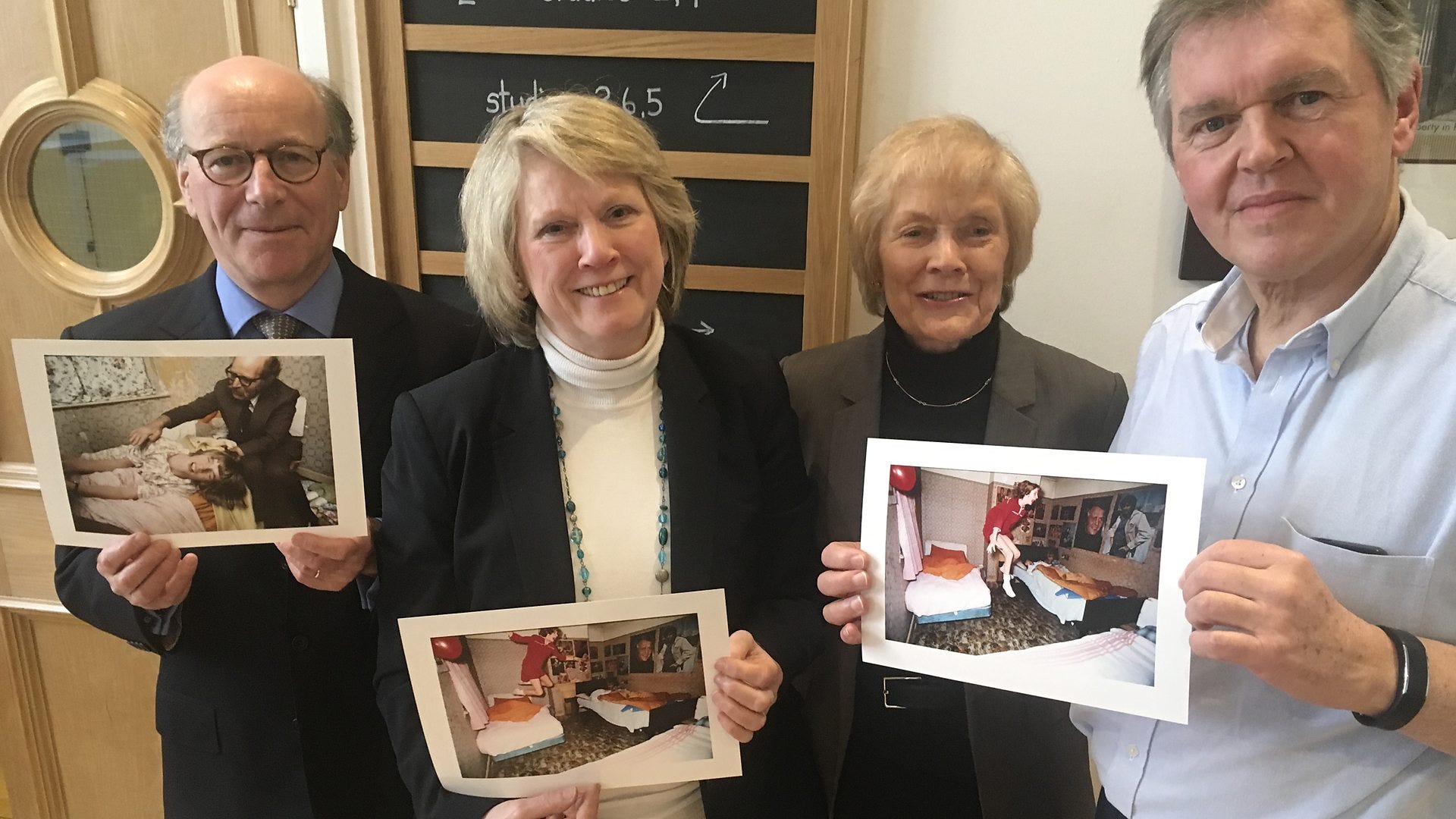
Who witnessed events at 284 Green Street
Police Constable Carolyn Heeps, who signed a sworn affidavit describing a chair moving independently across the floor
A second police officer who attended the initial call with PC Heeps
Reporter George Fallows and photographer Graham Morris of the Daily Mirror, who witnessed objects being thrown and photographed them mid-flight
BBC television crew members who found their recording equipment damaged and tapes wiped under unexplained circumstances
Neighbors from surrounding houses who reported unusual sounds and witnessed activity through windows
Members of the local church who visited the house
Multiple investigators from the Society for Psychical Research
American paranormal investigators Ed and Lorraine Warren, though their visit was brief and their approach disputed by other investigators
Members of the formal SPR committee who attended and interviewed witnesses directly
The diversity of the witness pool is one of the strongest arguments against a simple hoax explanation. Sworn police testimony, journalist accounts from reporters whose professional reputation depended on accuracy, investigators with decades of experience in paranormal research, and committee members from an academic organization all reported phenomena they could not conventionally explain. The alternative explanation requires all of them to have been simultaneously deceived by two young girls across eighteen months of active investigation.
The skeptical case
The skeptical case against the Enfield poltergeist is coherent and deserves full presentation.
Janet was an eleven-year-old school sports champion, physically capable of the acrobatic movements that the levitation photographs could represent. The voice attributed to Bill Wilkins displayed habits consistent with Janet’s own speech patterns. The investigators, particularly Grosse, came to the case with prior experiences that made them sympathetic to paranormal explanations, and Grosse’s personal grief may have shaped his interpretation of events. The SPR had an institutional interest in finding genuine paranormal phenomena. Ed Warren, who visited briefly, was characterized by other investigators as someone primarily interested in the commercial potential of the case rather than its scientific examination.
The stage magicians Milbourne Christopher and Joe Nickell, members of CSICOP, identified elements of the case as indicative of hoax and criticized the SPR investigators for being insufficiently skeptical. They demonstrated that most of the observed phenomena could be replicated through conventional means. Investigator Anita Gregory and SPR member John Beloff were unconvinced and found evidence the girls had faked incidents for journalists.
The tape recorder malfunction that Grosse attributed to supernatural activity and SPR president David Fontana described as defying the laws of mechanics was, according to Nickell, a peculiar threading jam known to occur with older reel-to-reel models of that type.
The photographic evidence of levitation was, according to investigator Melvin Harris, consistent with a child jumping from a bed, and Janet’s status as a school sports champion made the required athleticism unremarkable.
These are legitimate objections. They do not individually or collectively explain the sworn testimony of Police Constable Heeps about an independently moving chair, the Bill Wilkins voice details later confirmed by his son, or the consistency of phenomena reported by multiple independent witnesses who were not connected to each other and had no shared incentive to fabricate.
What the case leaves behind

The Enfield poltergeist case does not resolve cleanly. It does not resolve into a confirmed hoax and it does not resolve into confirmed paranormal activity. What it resolves into is a record that is more substantial and more difficult to dismiss than almost any other case of its type, produced under conditions of sustained investigation, and containing both confirmed trickery and phenomena that the investigators present could not explain through trickery alone.
Two details in particular do not disappear under skeptical pressure.
The first is PC Heeps’ affidavit. A uniformed police officer witnessed a heavy chair move four feet across a floor with no visible cause and signed a sworn legal document describing what she saw. Her career, her professional credibility, and her legal standing were all attached to that statement. She had nothing to gain from making it and everything to lose if she was wrong.
The second is Bill Wilkins. A voice emerging from an eleven-year-old girl provided details about the life and death of a previous resident of the house that the family did not know and that were subsequently confirmed by that man’s son in an independent contact with investigators. The alternative explanation requires Janet to have obtained this information through conventional means and to have deployed it over months of investigation without ever revealing how she obtained it. The son’s corroboration of specific details, including the position of the chair his father died in, is a data point that the trickery explanation does not cleanly absorb.
Peggy Hodgson stayed at 284 Green Street for twenty-five years after the activity ended. She died there in 2003. A family seeking attention or a better council house would have used the haunting to get one. She did not. She stayed.
Janet has maintained in every interview she has given across the decades since, including as an adult with no remaining incentive to maintain a fiction, that the majority of what happened at 284 Green Street was not something she or her sister produced. She has acknowledged the faking of some incidents. She has been consistent about the distinction between what was faked and what was not.
The eighteen months that ended in 1978 left behind police testimony, a voice on tape, a name confirmed by a dead man’s son, and the testimony of over thirty witnesses who saw things they could not explain.
That is the Enfield record.
It is messy, contested, and partially contaminated by confirmed fraud.
It is also the most documented poltergeist case in history.
Both things remain true.
Frequently asked questions
Was the Enfield poltergeist proven to be a hoax?
No. Some incidents were confirmed as faked by Janet and Margaret, including bending spoons on camera and banging a broom on the ceiling. Investigators estimated these faked incidents at approximately two percent of the total logged activity. The SPR committee that formally examined the case concluded there was good evidence for paranormal phenomena that could not be explained by trickery alone.
Who was Bill Wilkins?
Bill Wilkins was identified by the voice emerging from Janet as a previous resident of 284 Green Street who had gone blind in his later years and died in his favorite chair after suffering a hemorrhage. His son subsequently came forward independently to confirm that his father had lived in the house and died there in the manner described, including specific details about the position of the chair.
Did the police really witness paranormal activity at Enfield?
Police Constable Carolyn Heeps attended the house on August 31, 1977, and witnessed a chair slide approximately four feet across the floor with no visible cause. She signed a sworn affidavit describing what she saw. A second officer attended with her. Their testimony is part of the official record of the case.
Is The Conjuring 2 based on the Enfield poltergeist?
Yes. The 2016 film is based on Ed and Lorraine Warren’s investigation of the case, though their actual involvement was brief and other investigators disputed the Warren characterization of the events as demonic infestation.
What happened to the Hodgson family after the haunting?
Peggy Hodgson continued to live at 284 Green Street for twenty-five years after the main period of activity ended, until her death in 2003. Janet has given interviews as an adult maintaining that the majority of what happened was genuine. The house is still a private residence.
What is the Society for Psychical Research and should its conclusions be trusted?
The SPR is a research organization founded in 1882 to investigate paranormal claims scientifically. Its membership has included physicists, philosophers, and Nobel laureates. It is not a credulous organization: its members were divided on the Enfield case, with some convinced and others skeptical. The formal committee’s conclusion that there was good evidence for paranormal phenomena was qualified and reserved judgment on specific incidents that could not be clearly evaluated.
This case is filed as SQR-PAR-001. The paranormal investigation series begins here, with the case that set the standard for documentation, divided the experts, and still has not been cleanly resolved forty-eight years later.
Subscribe to Side Quests of Reality so you do not miss SQR-PAR-002, and the moment the cases start talking to each other.